
How to create a cryptocurrency
The main difference between hot and cold wallets is whether they are connected to the internet. Hot wallets are connected to the internet, while cold wallets are kept offline. https://sai-ghana.com/ This means that funds stored in hot wallets are more accessible and, therefore, easier for hackers to gain access to.
The best practise to store cryptocurrency assets that do not require instant access is offline in a cold wallet. However, users should note this also means that securing their assets is entirely their own responsibility — it is up to them to ensure they don’t lose the hardware wallet, or have it stolen.
Web wallets are hosted online and can be accessed through web browsers. While they offer convenience and ease of use, they typically store your private keys on their servers, increasing vulnerability to attacks. Users must be cautious and choose trustworthy services, often enabling two-factor authentication for added security.
A key is a long string of random, unpredictable characters. While a public key is like a bank account number and can be shared widely, the private key is like a bank account password or PIN and should be kept secret. In public key cryptography, every public key is paired with one corresponding private key. Together, they are used to encrypt and decrypt data.
Best cryptocurrency to buy
For astute investors, crypto assets can be an interesting addition to a diversified portfolio. However, they require careful research, strong security practices and a strong stomach to weather the volatility they bring. The Australian Government is yet to introduce legislation to Parliament to regulate crypto markets, and until they do, it will remain a haven for scammers.
Additionally, assessing an exchange’s liquidity and trading volume is essential. Higher liquidity generally results in improved price stability and faster trade executions. Furthermore, it is prudent to examine the fees charged by the exchange, encompassing deposit, withdrawal, and trading fees. Comparing fee structures across different exchanges can help you identify the most cost-effective option that aligns with your trading style. With that said, here are some of the best exchanges on the market right now:
Created in 2009 by Satoshi Nakamoto, bitcoin (BTC) is the original cryptocurrency. As with most cryptocurrencies, BTC runs on a decentralised blockchain technology, which is a ledger logging transactions distributed across a network of thousands of computers. Because additions to the distributed ledgers must be verified by solving a cryptographic puzzle, a process called proof of work, bitcoin is kept secure and safe from fraudsters.
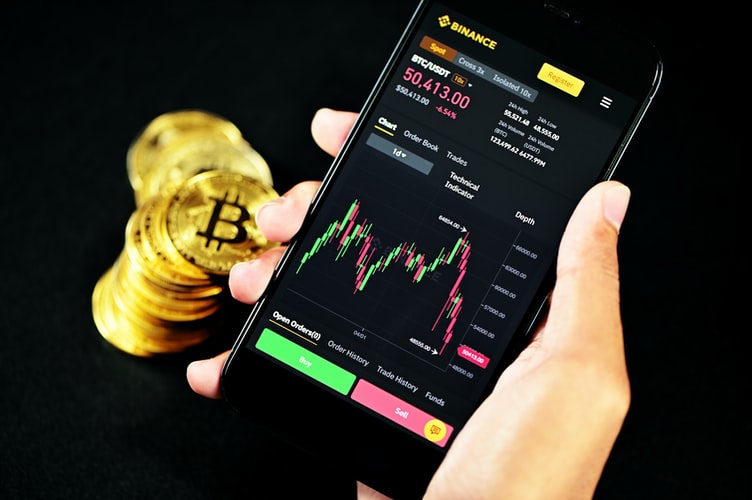
For astute investors, crypto assets can be an interesting addition to a diversified portfolio. However, they require careful research, strong security practices and a strong stomach to weather the volatility they bring. The Australian Government is yet to introduce legislation to Parliament to regulate crypto markets, and until they do, it will remain a haven for scammers.
Additionally, assessing an exchange’s liquidity and trading volume is essential. Higher liquidity generally results in improved price stability and faster trade executions. Furthermore, it is prudent to examine the fees charged by the exchange, encompassing deposit, withdrawal, and trading fees. Comparing fee structures across different exchanges can help you identify the most cost-effective option that aligns with your trading style. With that said, here are some of the best exchanges on the market right now:
Created in 2009 by Satoshi Nakamoto, bitcoin (BTC) is the original cryptocurrency. As with most cryptocurrencies, BTC runs on a decentralised blockchain technology, which is a ledger logging transactions distributed across a network of thousands of computers. Because additions to the distributed ledgers must be verified by solving a cryptographic puzzle, a process called proof of work, bitcoin is kept secure and safe from fraudsters.
Elon musk cryptocurrency
This article contains content provided by Twitter. We ask for your permission before anything is loaded, as they may be using cookies and other technologies. You may want to read Twitter’s cookie policy, external and privacy policy, external before accepting. To view this content choose ‘accept and continue’.
On Feb. 8, Tesla announced its purchase of $1.5 billion in BTC and the price skyrocketed 19.5% from $38,850 to $46,400 within the day. The amount of BTC bought by Tesla and used to purchase its vehicles was relatively small compared to daily trading volume on the nearly $1 trillion asset, yet it controlled the narrative in the market for months. On May 12, an “Elon effect” of a different sort took place when the CEO announced Tesla would no longer accept BTC as payment. While the market had already fallen hard off of its highs in the months before, this tweet put the nail in the coffin, sending the price of BTC from $56,800 to $49,500.
De meeste mensen die publiekelijk achter bitcoin staan en veel bitcoin bezitten, maken niet duidelijk hoeveel ze nu eigenlijk bezitten, voor de veiligheid van hun tokens. Hierdoor heeft Musk het eigenlijk nooit over zijn persoonlijke BTC bezit. Wel heeft hij zowel in het verleden als nu een grote impact op de koersen met zijn uitspraken en tweets.
Pi cryptocurrency
Similar to Bitcoin transactions, fees are optional in the Pi network. Each block has a certain limit of how many transactions can be included in it. When there is no backlog of transactions, transactions tend to be free. But if there are more transactions, nodes order them by fee, with highest-fee-transactions at the top and pick only the top transactions to be included in the produced blocks. This makes it an open market. Implementation: Fees are proportionally split among Nodes once a day. On every block, the fee of each transaction is transferred into a temporary wallet from where in the end of the day it is distributed to the active miners of the day. This wallet has an unknown private key. Transactions in and out of that wallet are forced by the protocol itself under the consensus of all nodes in the same way the consensus also mints new Pi every day.
As Bitcoin continued to increase in value, entire companies began to spring up to mine. These companies developed specialized chips (“ASICs”) and constructed huge farms of servers using these ASIC chips to mine Bitcoin. The emergence of these enormous mining corporations, known drove the Bitcoin Gold Rush, making it very difficult for everyday people to contribute to the network and get rewarded. Their efforts also began consuming increasingly large amounts of computing energy, contributing to mounting environmental issues around the world.
Explore further solutions in solving such challenges through technology and community organization, by either guiding and making programs for community developers to build Pi apps to address or providing suggestions and insights for the platform side to implement changes or features.
Pi Network’s vision is to build the world’s most inclusive peer-to-peer ecosystem and online experience, fueled by Pi, the world’s most widely used cryptocurrency. To deliver on this vision, it is important to grow the network and make Pi widely accessible while maintaining the security of the blockchain and long-term network incentives. While these goals have always guided the token supply model and mining design, the key distinction is: the pre-Mainnet phases focused on driving network growth and widely distributing Pi and the Mainnet phase will focus on rewarding more diverse forms of Pioneer contributions necessary for ecosystem building and utilities creation.
The supply distribution will honor the original distribution principle in the March 14, 2019 Whitepaper—the Pi community has 80% and the Pi Core Team has 20% of the total circulating supply of Pi, regardless of how much circulating supply there is in the Pi Network at any given point in time. Thus, given a total max supply of 100 billion Pi, the community will eventually receive 80 billion Pi and the Core Team will eventually receive 20 billion Pi. The following pie chart depicts the overall distribution. The Core Team’s allocation gets unlocked at the same pace as the community progressively mines more and more Pi and may be subject to additional lockup through a self-imposed mandate. This means that if the community has a portion of its allocation in circulation (for example, 25%), only the proportional amount in Core Team’s allocation (in this example, 25%) can get unlocked at most.